
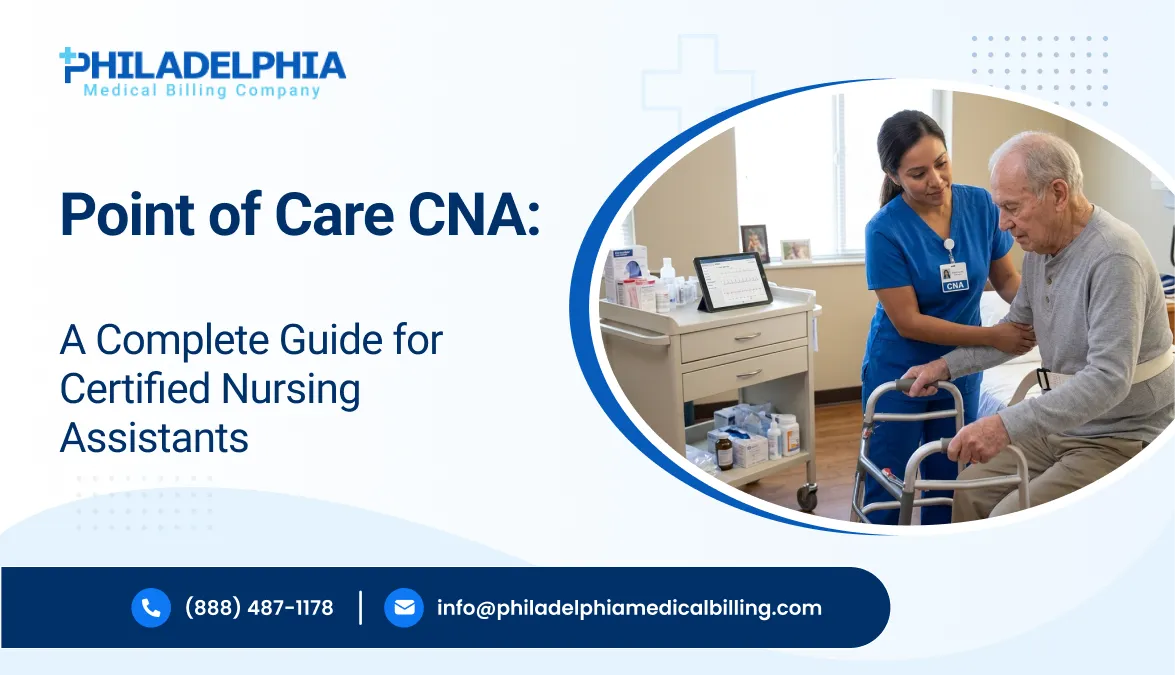
A certified nursing assistant notices that a resident who usually walks with minimal support suddenly needs help getting out of bed. The CNA reports the change to the supervising nurse, but the details never reach the electronic care record. By the next shift, another caregiver may not know that the resident’s mobility has changed.
This is where Point of Care CNA documentation becomes important.
Point-of-care technology lets certified nursing assistants record daily care activities, resident observations and assistance levels right when care happens. Of writing notes by hand or trying to recall everything at the end of a shift CNAs can log patient care as it occurs. This helps them stay on top of details and reduces the chance of missing something
For physicians, hospitals, skilled nursing facilities and healthcare administrators accurate CNA documentation is key. It improves how care teams talk to each other keeps patients safer helps with planning care and makes sure medical records are complete and up, to date.
This guide explains how Point of Care CNA systems work. It tells CNAs what they should document. It also covers the benefits of charting. It gives healthcare organizations tips on how to improve their documentation practices.
What Is Point of Care CNA?
Point of Care CNA means recording patient or resident care right where the care happens. This is usually done using a system. Certified nursing assistants or CNAs use this method to keep track of routines, personal care, movement, food intake and any changes in a residents health.
A CNA might write down information using a device a tablet, a computer or a workstation that is close to where the care is given. For example after helping a shower the CNA can record what kind of help was needed if the task was finished and any observations made during the process.
This data gets added to the resident’s file. It helps licensed nurses see how a resident is doing over time and decide if care needs have changed. One popular system for this is PointClickCare. It has a Point of Care app that lets CNAs record activities of living, vital signs and other care details.
Point of Care CNA is not only, about PointClickCare. Many healthcare centers use electronic health record systems or tools to do the same thing. The goal is always the same. To keep real-time records right at the point of care.
Why Is Point of Care CNA Important in Healthcare?
A patient’s care record should show exactly what happens during treatment and daily help. If notes are missing or written late doctors and nurses might not have the full picture when deciding how to care for the patient.
Point-of-care documentation helps fix this. It lets caregivers write down what they see and do right when it happens. This connects care with the full medical record. It makes sure everyone involved has the up-, to-date information.
1. Supports Better Patient Care
CNAs spend a lot of time helping patients with tasks. Their close watching can show changes that a doctor may not see away.
For example a resident who used to eat on their own may start needing help with food. Writing down and quickly telling the care team about this shift lets them look into why it happened and change the plan if needed.
2. Improves Communication Between Healthcare Professionals
Physicians and other health workers like registered nurses, licensed practical nurses and nursing assistants do jobs yet they all need information about the same patient.
Consistent charting by CNAs gives care team members, who are authorized access to a better history of routine care and the resident’s needs.
Electronic entries are a complement, not a replacement for communication, about urgent or significant changes.
3. Reduces Missing or Delayed Documentation
Paper-based workflows can make it difficult to spot charting that is not finished or to find information from shifts. Paper-based workflows also miss the prompts that Electronic systems give.
Electronic systems may give fields task lists and prompts, for documentation that help staff finish the required entries. Electronic systems keep records in a way that’s easier to find later.
4. Supports Clinical Oversight and Regulatory Readiness
Complete and accurate records help facilities show that care was given and that important observations were shared with the clinicians.
CMS stresses the need for timely documentation by CNAs including any changes, in help needs, food intake and vital signs.
How Does the Point of Care CNA System Work?
Step 1: Access the Authorized Documentation System
The nursing assistant signs in using the credentials assigned by the facility.
Access should follow the organization’s security policies, and staff should never share login information.
Step 2: Select the Correct Patient or Resident
Before recording care, the CNA confirms the correct resident profile using approved identifiers.
Selecting the wrong record can create inaccurate clinical information and raise patient safety concerns.
Step 3: Review Assigned Care Activities
The CNA reviews applicable care instructions, scheduled tasks, and documentation requirements.
These activities may include bathing, dressing, eating, toileting, transfers, mobility, and positioning.
Step 4: Document Completed Care
After providing assistance, the CNA records the services performed and the level of support the patient required.
For example, documenting that a patient needed substantial physical assistance provides more meaningful information than simply selecting “completed.”
Staff should follow the terminology and scoring instructions used by their specific documentation system.
Step 5: Report Changes to the Supervising Nurse
Electronic charting does not replace clinical escalation.
If a CNA notices sudden confusion, breathing difficulties, a significant change in mobility, or other concerning symptoms, they must follow the facility’s reporting and emergency response procedures.
Step 6: Verify the Documentation
Before completing the shift, the CNA reviews required entries for omissions or inaccuracies.
Corrections should preserve the integrity of the original clinical record and follow facility policy.
What Information Should CNAs Document at the Point of Care?
The exact documentation requirements depend on the patient’s condition, care setting, organizational policies, and the CNA’s permitted scope of practice.
The following table outlines common documentation categories.
| Documentation Area |
Examples of Information Recorded |
|---|---|
|
Activities of daily living |
Bathing, grooming, dressing, eating, toileting |
|
Mobility and transfers |
Walking assistance, repositioning, bed-to-chair transfers |
|
Nutritional intake |
Meal consumption, fluid intake when assigned |
|
Elimination |
Toileting assistance, bowel or bladder observations |
|
Vital signs |
Temperature, pulse, respiration, blood pressure when authorized |
|
Skin observations |
Redness, visible changes, or concerns reported to nursing staff |
|
Behavioral observations |
Changes in alertness, cooperation, or observed behavior |
|
Care refusal |
Care declined, circumstances, and notification according to policy |
The best documentation explains what care was given and what the patient did or showed. It doesn’t make guesses, about what is wrong.
For instance a CNA might write that a person needed help walking or that the person didn’t eat lunch. Deciding why these things happened is something trained and licensed doctors or nurses can do.
Point of Care CNA and Activities of Daily Living (ADLs)
Activities of living are central to CNA documentation because Activities of daily living help health workers understand how independently a resident can perform routine tasks.
Common ADLs include bathing, dressing, eating, toileting, personal hygiene and mobility‑related activities.
A nursing assistant should distinguish between a resident completing an activity and a resident completing the same activity with another persons help.
In nursing facilities information about a residents functional performance may help the assessment process, under the Minimum Data Set (MDS).
For example Section GG covers self‑care and mobility showing how much help a resident needs. CMS gives assessment instructions and training for these areas.
Importantly routine CNA charting and formal MDS Section GG scoring are not the process. Qualified assessment staff must use the CMS assessment rules of simply moving ordinary charting labels into MDS codes.
Key Benefits of Point of Care CNA for Hospitals and Nursing Facilities
The value of documentation goes beyond simply cutting paperwork. Point‑of‑care documentation helps create a more organized flow of information between direct care staff and healthcare decision‑makers.
For physicians point‑of‑care documentation offers observations that give extra context about a patient’s functional ability, nutritional intake and how the patient responds to daily assistance.
For nursing supervisors point‑of‑care documentation provides records that make it easier to spot incomplete tasks notice changes in care needs and review staff documentation.
For healthcare administrators point‑of‑care documentation offers charting that supports internal reviews, staff accountability, care coordination and initiatives to improve documentation quality.
For patients and residents point‑of‑care documentation improves communication, among caregivers supporting continuity of care especially when patients need help across shifts.
These benefits of documentation depend on how accurate the entries are, how well staff are trained and whether the organization acts appropriately on the information recorded in the system.
Common Point of Care CNA Documentation Errors
Even with electronic charting, healthcare organizations can encounter documentation problems. Most issues arise from incomplete entries, incorrect patient selection, or inconsistent reporting practices.
1. Documenting Care Long After It Occurs
When CNAs postpone documentation until the end of a busy shift, they may forget important details or confuse observations between residents.
Best practice: Record care as soon as reasonably practical after completing the activity, following facility procedures.
2. Selecting an Incorrect Assistance Level
A resident who requires hands-on assistance should not be recorded as independent simply because they participated in the activity.
Best practice: Document the actual assistance provided and use the definitions applicable to the charting system.
3. Copying Previous Documentation
Repeating information from an earlier shift without verifying it can produce misleading records.
Best practice: Record current observations and activities. Never assume that a patient’s condition or functional abilities have remained unchanged.
4. Recording Clinical Conclusions Beyond the CNA’s Scope
CNAs can report observations, but they should not independently diagnose medical conditions or document an unconfirmed diagnosis as established.
Best practice: Use objective language and communicate concerns to the supervising licensed professional.
5. Failing to Report Significant Changes
Entering a change into an electronic record does not guarantee that a nurse or physician will review it immediately.
Best practice: Follow direct reporting and escalation procedures whenever the patient’s condition requires clinical attention.
How Point of Care CNA Supports Medical Billing and Reimbursement
Point-of-care documentation helps with healthcare revenue cycle management in skilled nursing facilities and similar places. This is because patient assessments and clinical records directly impact how much money is received for care.
CNA charting alone doesn’t prove medical necessity. It doesn’t create a doctor’s diagnosis. It doesn’t approve an insurance payment.
The financial value of CNA charting comes from being part of the picture. It fits into the documentation process that supports billing and reimbursement.
Supporting Accurate Patient Assessments
In Medicare-certified skilled nursing facilities, the MDS helps capture information that may affect patient classification and reimbursement under the Patient-Driven Payment Model (PDPM).
CNAs frequently observe residents performing daily activities. Their accurate observations can assist the clinicians responsible for assessments in understanding functional performance.
CMS requires skilled nursing facility assessments to consider direct observations and communications with care staff, including non-licensed personnel.
Strengthening Medical Record Completeness
Incomplete clinical records can create difficulties when providers respond to payer reviews or demonstrate that covered services met applicable requirements.
For example, documenting the amount of assistance required for daily activities can help illustrate a resident’s functional limitations.
However, a record of routine assistance alone does not establish that Medicare-covered skilled nursing services were medically necessary.
Improving Coordination Between Clinical and Revenue Cycle Operations
Healthcare organizations gain advantages when clinical documentation, assessment processes and billing activities work in a way.
A recorded change in a persons ability to function can lead to an evaluation. Qualified clinical staff can then decide if the care plan, the assessment record or any other necessary documents need to be updated.
For providers in Pennsylvania, Philadelphia Medical Billing can be a resource for looking at revenue cycle processes issues related to documentation, on claims and the steps involved in getting paid. Medical billing help should work with not take the place of the clinical teams job of making sure patient assessments and records are correct.
Point of Care CNA Documentation and HIPAA Compliance
Electronic documentation contains protected health information, making privacy and security essential.
The Health Insurance Portability and Accountability Act (HIPAA) establishes requirements for protecting health information, while healthcare organizations must implement applicable privacy and security safeguards.
Facilities should establish clear procedures for electronic charting, including:
- Providing individual user accounts and role-appropriate access.
- Preventing unauthorized individuals from viewing patient records.
- Using approved devices and secure authentication procedures.
- Logging out of shared workstations after use.
- Following facility policies for corrections and record retention.
- Reporting suspected privacy or security incidents promptly.
Healthcare administrators should also provide ongoing training so CNAs understand how to use electronic documentation systems without compromising patient privacy.
How Hospitals and Nursing Facilities Can Improve CNA Documentation
Purchasing an electronic charting system does not automatically solve documentation problems. Healthcare organizations must build practical workflows around the technology.
Provide Task-Specific Training
New nursing assistants should understand how to document care activities, record assistance levels, report patient concerns, and correct errors.
Training should include examples drawn from actual caregiving situations rather than relying entirely on software demonstrations.
Keep Charting Consistent Across Shifts
Facility leadership should establish clear definitions for required documentation and the expected timing of entries.
Different shifts should follow the same approved standards, even when their patient workloads differ.
Review Documentation Quality
Nursing supervisors can periodically review records for missing entries, unusual patterns, and inconsistencies between reported care and documented care.
Reviews should focus on improving the accuracy and usefulness of clinical information.
Connect Documentation With Care Planning
Staff should understand why their observations matter.
If a resident’s ability to transfer, eat, or move independently changes, the information should reach the professionals responsible for evaluating and updating the care plan.
Choose Technology That Fits the Clinical Workflow
Healthcare administrators should evaluate documentation software based on ease of use, accessibility, security, integration capabilities, and the care setting’s specific needs.
A well-designed system should make accurate recording easier without distracting caregivers from patient care.
Point of Care CNA vs. Traditional Paper Charting
Both methods require accurate documentation, but the workflow differs.
|
Feature |
Point of Care CNA |
Traditional Paper Charting |
|---|---|---|
|
Documentation method |
Electronic entries |
Handwritten records |
|
Timing |
Can be completed near the care activity |
May require returning to a charting area |
|
Accessibility |
Authorized users may access records electronically |
Requires access to physical records |
|
Standardization |
Structured fields and prompts may be available |
Depends on paper forms and staff practices |
|
Missing entries |
Some systems provide task reminders |
Often identified through manual review |
|
Data security |
Requires electronic security controls |
Requires secure physical storage and access |
|
Clinical integration |
May connect with a broader EHR |
Often requires manual transfer of information |
Electronic charting can improve efficiency, but the advantages depend on system implementation, staffing, training, and reliable access to technology.
Frequently Asked Questions About Point of Care CNA
What does Point of Care mean for a CNA?
Point of Care refers to documenting patient or resident care at or near the location where the care is delivered. CNAs use electronic charting systems to record daily assistance, observations, and other assigned care activities.
Is Point of Care CNA the same as PointClickCare?
No. Point of Care CNA describes a documentation workflow, while PointClickCare is a specific healthcare technology platform that offers a Point of Care application.
What should a CNA document in a point-of-care system?
Depending on the facility and assigned responsibilities, CNAs may document bathing, dressing, eating, toileting, transfers, mobility, vital signs, and resident observations. Documentation should remain within the CNA’s authorized scope.
Can CNAs document patient assessments?
CNAs can document factual observations and information related to assigned care responsibilities. They should not independently perform assessments reserved for licensed professionals or establish medical diagnoses.
How does CNA charting affect medical billing?
Accurate CNA records may support the broader clinical documentation and assessment process, especially in skilled nursing facilities. However, CNA charting does not independently establish coverage or reimbursement eligibility.
Can hospitals use Point of Care CNA systems?
Yes. Hospitals may use point-of-care electronic documentation for nursing assistants and other support staff. The available features and specific documentation requirements vary by software platform and healthcare setting.
Conclusion
Accurate patient documentation begins with the care delivered at the bedside.
Point of Care CNA systems help certified nursing assistants record daily activities, communicate relevant observations, and maintain a clearer record of patient care. For physicians, hospitals, and nursing facilities, these records can provide valuable supporting information for clinical decisions and care coordination.
The technology works best when healthcare organizations combine timely charting with proper staff training, clear reporting procedures, and consistent documentation standards.
Most importantly, every entry should reflect the care actually provided. Reliable documentation helps healthcare professionals understand patient needs, recognize changes, and maintain a more complete clinical record.
Improve Documentation-Related Billing Workflows With Philadelphia Medical Billing
Accurate clinical records and organized revenue cycle processes both contribute to efficient healthcare operations. When documentation gaps, claim errors, or payer requirements create unnecessary administrative work, healthcare providers need practical solutions.
Philadelphia Medical Billing helps healthcare organizations focus on billing accuracy, claims management, and revenue cycle efficiency.
Contact our team to discuss your medical billing challenges and explore ways to improve your practice’s revenue cycle performance.